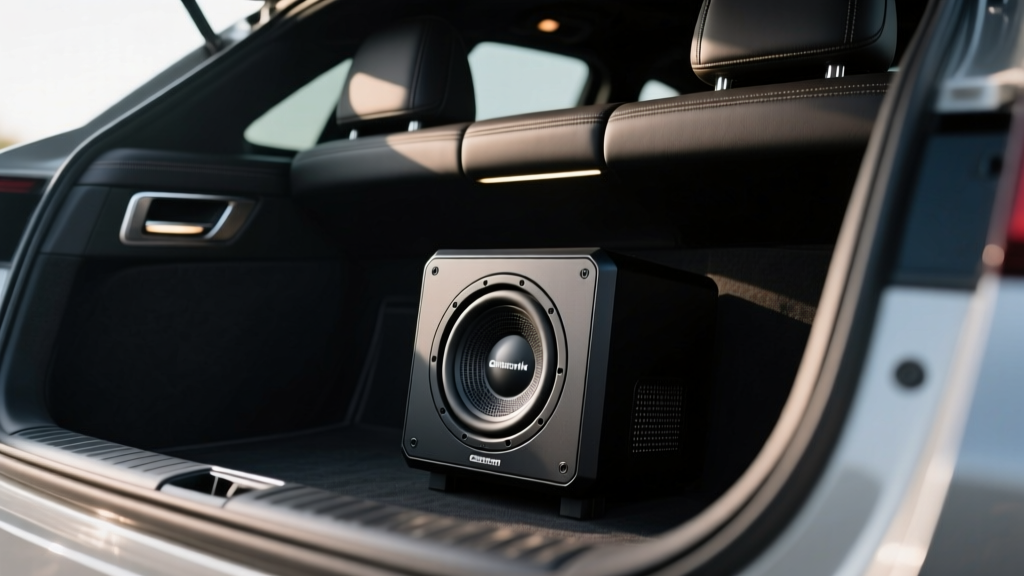
Subwoofer Box for Your Vehicle: Best Picks (2026)
A great subwoofer can transform your system, but the subwoofer box is what makes that bass feel tight, punchy, and controlled?or boomy, weak, and disappointing. The enclosure isn?t just a container. It?s an acoustic tool that determines how your sub moves air, how low it plays, how clean it sounds, and how well it fits your everyday life (cargo space, seat folding, and even whether your trunk still works like a trunk).
If you?ve ever heard two cars with the same subwoofer model sound totally different, the box is usually the reason. The right enclosure can make a modest sub sound impressive; the wrong one can make an expensive sub underperform. This guide breaks down the box types, sizing, fitment, materials, and real-world considerations so you can choose confidently?whether you?re aiming for balanced sound quality, chest-thump SPL, or a little bit of both.
Why the Subwoofer Box Matters More Than Most People Think
Your subwoofer is designed to work within specific air volume and tuning parameters. The enclosure controls:
- Frequency response: how deep it plays and where it gets loudest
- Transient response: how ?tight? or ?slow? bass feels
- Power handling: how much wattage it can use safely
- Efficiency: how loud it gets with the power you have
- Practical fit: how much cargo room you lose and how secure the setup is
In short: choose the right box and your sub performs the way it was engineered to. Choose the wrong box and you?ll chase the sound with EQ, gain adjustments, and upgrades you may not actually need.
Start With Your Goal: Sound Quality, Loudness, or Balanced Daily Bass
Before you compare box specs, decide what you want your system to do.
Sound quality (SQ) priorities
- Tight, accurate bass that blends with your door speakers
- Good definition for kick drums and bass guitar
- Less ?one-note? boom
Typical box direction: sealed enclosure, or a well-designed low-tuned ported box with conservative tuning.
Loudness (SPL) priorities
- Maximum output with the same sub and amp
- Strong low-frequency impact and cabin pressure
- Often tuned to favor a specific range (depending on music style)
Typical box direction: ported enclosure (bass reflex) or bandpass for specialized builds.
Balanced daily driver priorities
- Solid output without sacrificing all trunk space
- Good sound on multiple music genres
- Durable and easy to live with
Typical box direction: sealed for simplicity, or a compact ported enclosure tuned in the low 30s.
Know the Main Types of Subwoofer Boxes
Sealed (acoustic suspension) boxes
Sealed enclosures are airtight. They?re popular because they?re compact, forgiving, and often sound very controlled.
- Pros: tight bass, smaller size, easier to build, works well with many subs
- Cons: generally less output than ported with the same power, less ?free? loudness
- Best for: rock, jazz, acoustic, balanced listening, small trunks and hatchbacks
Real-world example: If you drive a compact sedan and want clean bass that doesn?t drown out vocals, a sealed 10" or 12" is often the sweet spot.
Ported (bass reflex) boxes
Ported boxes use a vent (slot port or round port) tuned to a specific frequency to increase output and efficiency.
- Pros: louder around tuning frequency, deeper ?feel? with less power, great for hip-hop/EDM
- Cons: larger box, can sound boomy if tuned high or built poorly, needs a sub designed for ported use
- Best for: bass-heavy music, people who want more output without upgrading amps
Tip: Tuning matters. A box tuned around 32?35 Hz often works well for daily listening with modern music, while higher tuning can be louder but less deep.
Bandpass boxes
Bandpass enclosures place the sub inside the box and vent sound through a ported chamber.
- Pros: very loud in a narrower frequency range, impressive ?wow? factor
- Cons: larger and more complex, can sound unnatural outside its range, harder to design correctly
- Best for: SPL-focused builds or specific music preferences
Vehicle-specific stealth boxes
These are molded enclosures designed to fit into unused spaces (side panels, under seats, rear quarter areas).
- Pros: excellent fit and finish, preserves cargo room, OEM-like look
- Cons: pricier, limited to specific sub sizes and air volumes
- Best for: SUVs, trucks, and anyone who needs their cargo space daily
Step-by-Step: How to Choose the Right Subwoofer Box
Step 1: Confirm your subwoofer?s recommended box specs
Find the manufacturer?s enclosure recommendations (usually listed as ?sealed volume,? ?ported volume,? and ?tuning frequency?). This matters more than guessing.
- Look for net internal volume (after subtracting sub displacement and port displacement).
- Check whether specs are listed in cubic feet or liters.
Practical tip: If you?re shopping for a prefab enclosure, compare the box?s net volume to the sub?s recommended range. If the listing only shows ?gross volume,? expect the actual working volume to be smaller once the sub and port take up space.
Step 2: Measure your available space (and be honest about daily use)
Measure where the box will go and consider how you use your vehicle.
- Sedans: trunk width, height under rear deck, depth near latch
- Hatchbacks: clearance to hatch, spare tire access, cargo cover fit
- Trucks: under-seat height, seat folding mechanism, amp placement
Rule of thumb: Leave room for wiring, airflow around the amp (if mounted nearby), and the ability to remove the box if you need the space.
Step 3: Decide sealed vs ported based on your music and power
If you listen to a variety of genres and want clean bass, sealed is a safe bet. If you mainly play bass-heavy tracks and want more output without adding power, ported usually wins.
- Low power setups (e.g., 250?500W RMS): ported can feel much louder
- High power setups (e.g., 800W+ RMS): sealed can stay controlled and compact; ported can get very loud if designed right
Step 4: Choose the right box size and tuning (ported)
Ported enclosures need two things to be right: the volume and the tuning frequency (Fb). When either is off, you get sloppy bass, weak low-end, or port noise.
- Daily listening: often 32?35 Hz tuning
- More punch/?kick?: often 36?40 Hz (can sacrifice depth)
- Deep bass focus: low 30s or even below (requires larger box and careful design)
Real-world example: A 12" sub in a compact, high-tuned prefab ported box might sound loud on certain notes but disappear on deeper bass lines. The same sub in a properly sized, lower-tuned box often sounds fuller and more consistent.
Step 5: Verify build quality and materials
The box needs to be rigid to prevent flex, rattles, and energy loss.
- Material: 3/4" MDF is standard; 1" MDF is better for big power builds
- Bracing: internal bracing reduces panel flex (especially for ported boxes)
- Sealing: sealed boxes must be airtight; ported boxes should have solid joints and no leaks
- Terminal cup and wiring: quality terminals reduce headaches later
Tip: If you can press on a large panel and feel it flex easily, the box may resonate and color your bass. Better enclosures feel solid and ?dead? when tapped.
Step 6: Match box design to cabin placement
Placement affects bass response due to cabin gain and reflections.
- Sedans: firing sub and port toward the rear can load the trunk well; sealing trunk leaks helps
- Hatchbacks/SUVs: rear-firing often yields strong output; experiment with box position
- Trucks: under-seat sealed enclosures are common; output can be strong due to cabin gain
Quick test: If your bass feels weak, try rotating the box (sub facing rear vs up vs cabin) before buying new gear.
Prefab vs Custom: Which Makes Sense for You?
Prefab boxes
Prefab enclosures are convenient and budget-friendly, but they?re hit-or-miss.
- Best for: straightforward sealed builds, common sub sizes, quick installs
- Watch for: unknown net volume, thin wood, poor bracing, high tuning on ported models
Custom boxes
Custom enclosures are built to your sub?s specs and your vehicle?s space.
- Best for: maximizing performance, odd-shaped spaces, low-tuned ported builds
- Tradeoff: cost and build time
Practical tip: If you?re going ported and you care about sound quality, custom often pays off because you can get the tuning and port area right.
Product Recommendations and Comparisons (What to Look For)
Rather than pushing one ?best? box for every vehicle, shop by category and specs. Here are reliable directions to compare.
If you want clean, compact bass (sealed)
- Look for: 3/4" MDF, internal volume matched to your sub?s sealed spec, solid terminal cup
- Great for: 10" sealed in small cars; 12" sealed in mid-size sedans/SUVs
- Comparison tip: Choose the box with better build (thicker MDF, tighter joints) over flashy carpet or styling.
If you want louder bass per watt (ported)
- Look for: published tuning frequency, adequate port area (to reduce chuffing), bracing
- Slot port vs round port: slot ports are common in prefabs; round ports can work well if properly sized
- Comparison tip: Avoid ?universal? ported boxes that don?t list tuning or net volume?those are often tuned high and can sound one-note.
If you drive a truck or need cargo space (vehicle-specific/under-seat)
- Look for: enclosure designed for your exact cab configuration, adequate mounting depth, heat management for nearby amps
- Comparison tip: Confirm whether the enclosure is made for shallow-mount subs or full-depth subs.
Common Mistakes to Avoid
- Buying a box before choosing the sub (or ignoring the sub?s specs): volume mismatches are one of the top causes of weak bass.
- Confusing ?gross? and ?net? volume: ported boxes especially can lose meaningful volume to port displacement.
- Choosing a ported box tuned too high: loud on a narrow range, lacking deep bass, more boom and less musicality.
- Ignoring air leaks and loose panels: leaks reduce output and can create annoying noises.
- Underestimating box size: that ?small ported box? might not fit the trunk opening or allow the seat to fold.
- Skipping secure mounting: an unrestrained box can shift during braking or a collision?use brackets, straps, or trunk anchors.
Practical Setup Tips for Better Bass (Even Before You Upgrade)
- Seal the trunk: in sedans, rear deck leaks and trunk gaps can reduce bass transfer into the cabin.
- Deadening helps: sound deadening on trunk lid and rear deck reduces rattles and makes bass feel stronger.
- Set gains properly: distortion makes bass sound ?loud? but unpleasant and can damage gear.
- Use a subsonic filter (ported): protects the sub below tuning frequency where it can unload.
- Experiment with orientation: facing rear vs up vs toward the cabin can change output dramatically.
FAQ: Choosing a Subwoofer Box
1) What?s better: sealed or ported for daily driving?
For most daily drivers who want clean, consistent bass across different music, sealed is the easiest win. If you want more output and deeper ?feel? with the same power, a properly designed ported box can be excellent?just make sure the volume and tuning match your sub.
2) How do I know if a prefab box will work with my subwoofer?
Check the sub manufacturer?s recommended enclosure volume and compare it to the box?s net internal volume. If the box listing doesn?t provide net volume (and tuning for ported), it?s a gamble. When in doubt, choose a sealed prefab with the correct volume range.
3) Does box placement in the trunk really matter?
Yes. In many sedans and hatchbacks, pointing the sub (and port, if ported) toward the rear of the vehicle increases loading and output. Small changes?like moving the box closer to the trunk lid or rotating it?can noticeably change bass response.
4) Can I run a subwoofer in a box that?s slightly bigger or smaller than recommended?
Small deviations are often workable, especially with sealed boxes. Too small can sound tight but may reduce low-end extension; too large can reduce control. Ported boxes are less forgiving?incorrect volume or tuning can lead to weak deep bass, port noise, or higher risk of over-excursion.
5) What thickness wood should a good sub box use?
Most quality enclosures use 3/4" MDF. For higher power systems or larger panels, 1" MDF and solid bracing help prevent flex and rattles. Avoid thin particle board for anything beyond very modest setups.
6) Is a custom box worth the money?
If you?re tight on space, want a specific tuning, or you?re investing in a higher-end sub and amp, custom is often worth it. You?ll get the correct net volume, proper port design (if ported), and a fit that makes the system easier to live with.
Conclusion: A Simple Plan to Pick the Right Box
If you want bass that feels right every time you drive, start with the sub?s recommended specs, measure your available space, then choose the enclosure type that matches your goals. Sealed boxes win for compact, clean sound and easy installs. Ported boxes win for output and low-end impact?when the volume and tuning are correct. From there, prioritize build quality (MDF thickness, bracing, and tight joints) and don?t underestimate the impact of placement and setup.
Next steps:
- Find your subwoofer?s recommended sealed and ported enclosure specs.
- Measure your trunk/cargo area and write down maximum dimensions you can live with.
- Pick sealed or ported based on your music and loudness goals.
- Compare enclosures by net volume, tuning (ported), and build quality?not just price.
- After installation, test orientation and set gain/subsonic filters properly.
For more practical car audio and interior upgrade guides, browse the latest articles on carinteriormix.com and build a system that sounds as good as it looks.